Cryptocurrency ownership gives users full control over their funds, but it also places responsibility for security entirely in their hands. Unlike traditional banks, blockchain systems offer no account recovery, no password resets, and no central authority to reverse mistakes. For this reason, choosing a secure wallet solution is essential for anyone entering the crypto world.
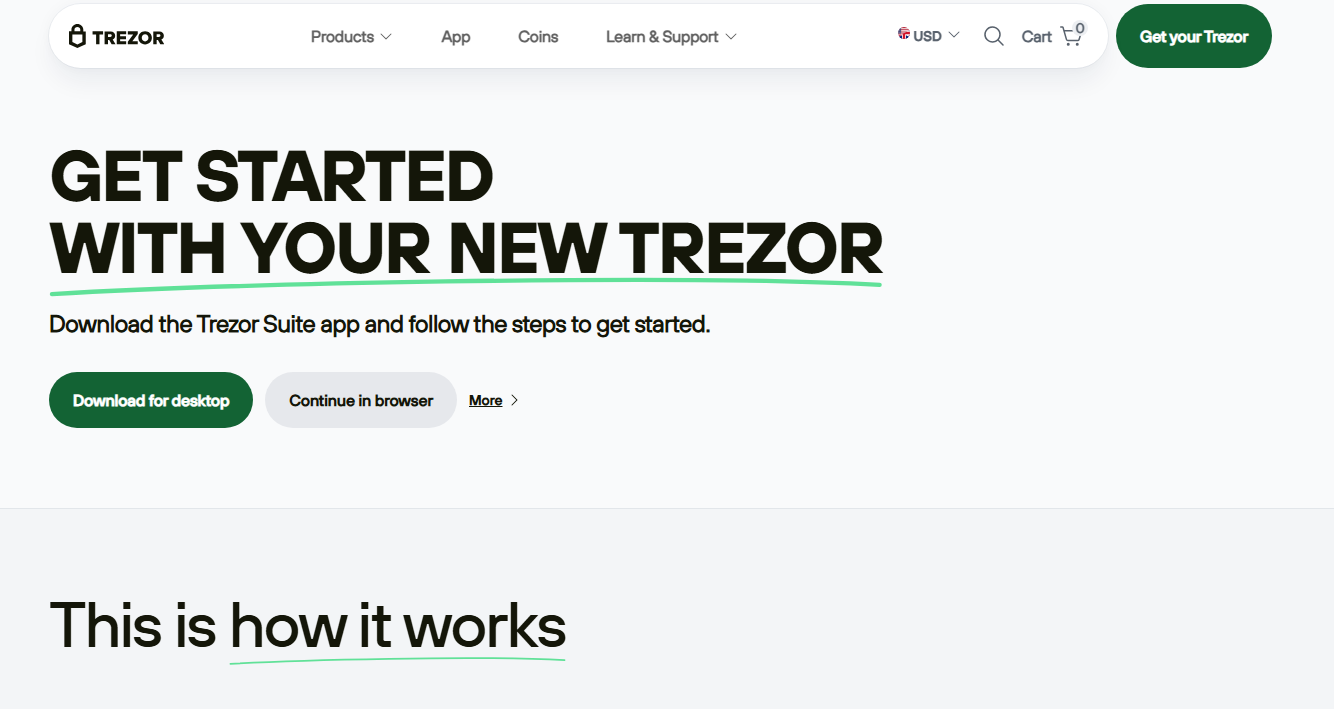
Trezor.io/start is the official onboarding portal developed by SatoshiLabs to help users safely activate and configure their Trezor hardware wallets. This platform ensures that users install authentic software, generate secure recovery backups, and complete all required security checks before managing digital assets.
This guide explains what Trezor.io/start is, how it works, and why it is the safest way to begin using a Trezor wallet.
Trezor.io/start is the official setup page for Trezor hardware wallets. It walks users through the secure initialization process, helping them avoid counterfeit apps, malicious firmware, and phishing websites.
From this portal, users can:
Using Trezor.io/start ensures that your wallet setup follows verified security standards directly from the manufacturer.
Online wallets and exchanges store private keys in internet-connected environments, making them vulnerable to hacking and malware. Hardware wallets eliminate this risk by isolating private keys offline and requiring physical confirmation for transactions.
Trezor.io/start provides a trusted gateway into this secure ecosystem.
Trezor.io/start supports all current Trezor hardware wallets:
Both devices use the same official onboarding workflow through Trezor.io/start.
Follow these steps carefully to ensure your Trezor wallet is initialized securely.
Open your web browser and manually enter:
trezor.io/start
Avoid clicking ads or unfamiliar links. Bookmark the official page for future access.
Select your device model (Model One or Model T) so the setup instructions match your hardware.
Trezor Suite is the official wallet management application that allows you to:
Always download Trezor Suite directly from Trezor.io/start to avoid counterfeit software.
After downloading:
The app will guide you through the remaining steps.
Plug your Trezor into your computer using the provided USB cable. If prompted, allow browser or app permissions to connect your device.
If your device is new, Trezor Suite will prompt you to install official firmware. This ensures your wallet runs trusted software before generating keys.
Choose “Create new wallet” in Trezor Suite. Your device will generate a new private key securely inside the hardware wallet.
Your Trezor will display a 12-word or 24-word recovery seed (depending on your device and settings). This seed phrase is the only way to recover your wallet if your device is lost or damaged.
Trezor Suite will ask you to verify the seed before continuing.
Create a strong PIN code to protect your device from unauthorized physical access. The PIN is entered using a randomized keypad displayed on your computer screen, protecting it from keyloggers.
Trezor offers additional protection options such as:
These features can be enabled later but are recommended for advanced users.
Once setup is complete:
Your wallet is now ready for secure use.
Trezor Suite provides a complete crypto management platform.
Monitor asset balances and market values in real time.
Trade directly within Trezor Suite using integrated exchange partners.
Use Tor routing, coin control, and labeling for enhanced transaction privacy.
Manage ERC-20 tokens, NFTs, and supported networks securely.
Install verified firmware updates directly through Trezor Suite.
Even with hardware protection, good security habits are essential.
Trezor will never ask for your recovery phrase — not by email, chat, or phone.
Only use Trezor.io/start to download software.
Avoid simple PINs and enable passphrase protection for advanced security.
Use fireproof safes or metal backups for long-term protection.
Manage your wallet only on devices you trust.
Your cryptocurrency is not stored on the physical device — it remains on the blockchain. Your Trezor simply protects the private keys.
If your device is lost or destroyed:
As long as your recovery seed is secure, your assets remain safe.
FeatureTrezor Hardware WalletSoftware WalletKey StorageOfflineOnlineMalware ResistanceVery HighModerateTransaction ApprovalPhysical deviceSoftware-basedBest for Long-Term StorageYesLimitedRecovery MethodRecovery seedPassword/email
Trezor.io/start offers strong protection without sacrificing usability.
Trezor.io/start guarantees:
Using unofficial sources significantly increases security risks.
Trezor.io/start is designed for users of all experience levels:
No advanced technical knowledge is required.
Create hidden wallets secured by a custom passphrase.
Split your recovery seed into multiple shares, reducing single-point-of-failure risks.
Route transactions through Tor for enhanced privacy.
Manually manage UTXOs for improved transaction privacy.
Trezor Suite supports:
This allows seamless wallet management across platforms.
Trezor does not use usernames or passwords. Security depends on:
This ensures full ownership and self-custody.
Trezor firmware updates improve:
Always back up your recovery seed before installing updates.
Trezor.io/start is ideal for:
Anyone who values self-custody and transparency benefits from Trezor hardware wallets.
Trezor is trusted globally due to:
Trezor.io/start plays a vital role in maintaining this trust.
Trezor.io/start is the safest and most reliable gateway into hardware wallet security. By following the official setup process — installing Trezor Suite, creating a PIN, backing up your recovery seed, and verifying firmware — users gain full control over their digital assets.
In a crypto landscape filled with hacks, scams, and exchange failures, Trezor.io/start delivers peace of mind through offline private key storage, open-source transparency, and verified software.